 Image 1 of 1
*This Document is a Printable PDF. It can be reproduced for the purpose of personal use and work with clients.
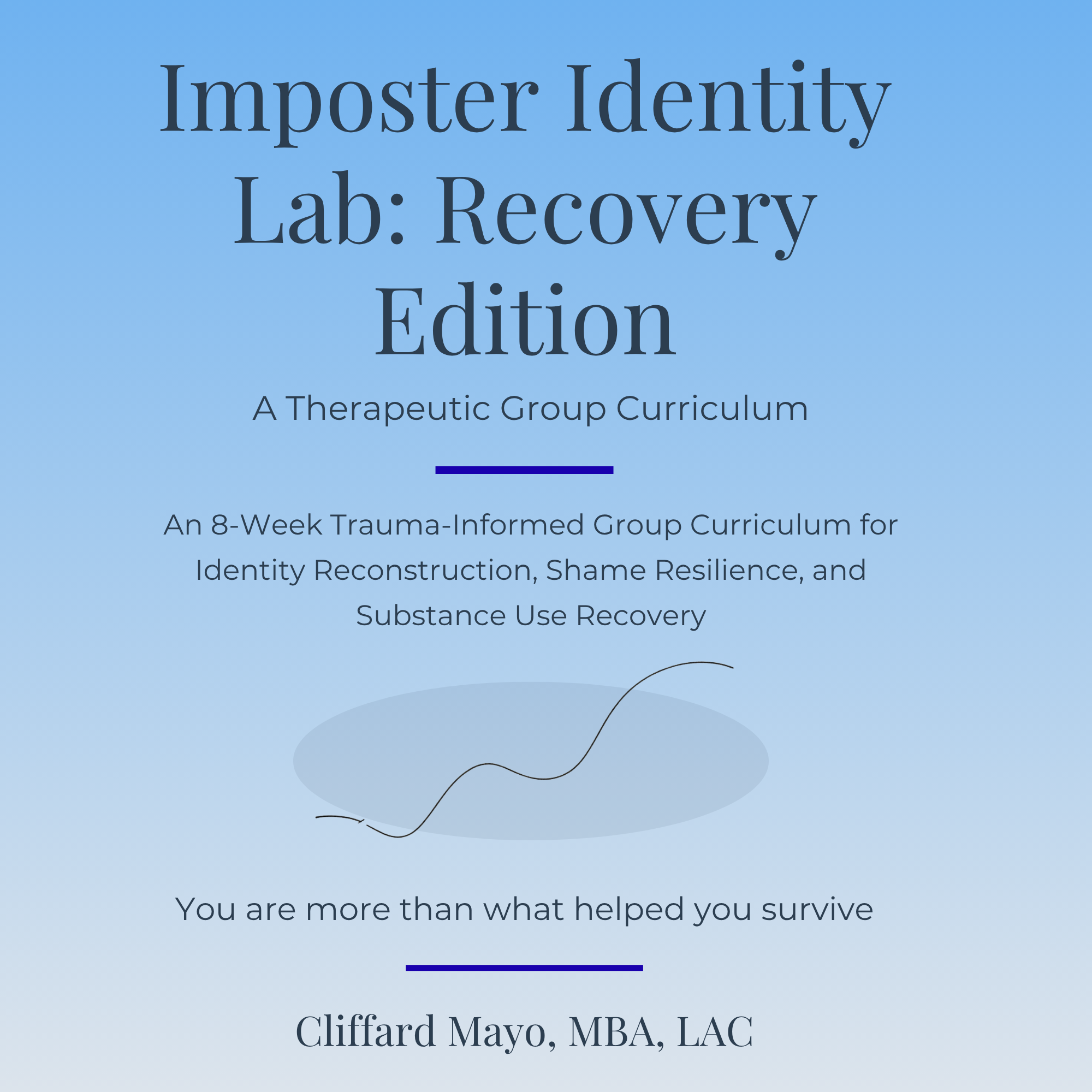
The Imposter Identity Lab: Recovery Edition is an 8‑week trauma‑informed therapeutic group curriculum designed to help clients rebuild identity, strengthen shame resilience, and reconnect with their authentic self in substance use recovery. This structured program gives behavioral health professionals a complete, clinically grounded framework for guiding clients through identity disruption, borrowed beliefs, parts work, archetype patterns, nervous system awareness, cultural identity, internal leadership, and recovery integration.
Each week includes clear objectives, facilitator education, preparation checklists, scripted prompts, processing questions, skill‑building exercises, and closing practices. The curriculum emphasizes safety, pacing, choice, and nonjudgmental curiosity, making it ideal for clients who can engage in reflective, skills‑based discussion without being asked to provide detailed trauma or substance‑use histories.
Facilitators receive printable worksheets, identity maps, parts mapping tools, archetype logs, cultural reflection exercises, grounding practices, and integration activities that support meaningful identity reconstruction. The curriculum also includes a full client group agreement, weekly worksheets, an Identity Noticing Log, and a comprehensive set of grounding tools for recovery groups.
The Imposter Identity Lab: Recovery Edition offers a modern, accessible, and deeply supportive approach to recovery identity work. It helps clients understand their internal patterns, reclaim their story, and build a recovery identity rooted in truth, compassion, and internal leadership.
Full 8‑week trauma‑informed curriculum
Step‑by‑step facilitator guides
Weekly objectives and clinical focus
Scripted prompts and processing questions
Client worksheets and identity maps
Parts mapping and archetype tools
Cultural identity reflection exercises
Identity Noticing Log and Activation Logs
Grounding practices for recovery groups
Group agreement and safety framework
*This Document is a Printable PDF. It can be reproduced for the purpose of personal use and work with clients.
The Imposter Identity Lab: Recovery Edition is an 8‑week trauma‑informed therapeutic group curriculum designed to help clients rebuild identity, strengthen shame resilience, and reconnect with their authentic self in substance use recovery. This structured program gives behavioral health professionals a complete, clinically grounded framework for guiding clients through identity disruption, borrowed beliefs, parts work, archetype patterns, nervous system awareness, cultural identity, internal leadership, and recovery integration.
Each week includes clear objectives, facilitator education, preparation checklists, scripted prompts, processing questions, skill‑building exercises, and closing practices. The curriculum emphasizes safety, pacing, choice, and nonjudgmental curiosity, making it ideal for clients who can engage in reflective, skills‑based discussion without being asked to provide detailed trauma or substance‑use histories.
Facilitators receive printable worksheets, identity maps, parts mapping tools, archetype logs, cultural reflection exercises, grounding practices, and integration activities that support meaningful identity reconstruction. The curriculum also includes a full client group agreement, weekly worksheets, an Identity Noticing Log, and a comprehensive set of grounding tools for recovery groups.
The Imposter Identity Lab: Recovery Edition offers a modern, accessible, and deeply supportive approach to recovery identity work. It helps clients understand their internal patterns, reclaim their story, and build a recovery identity rooted in truth, compassion, and internal leadership.
Full 8‑week trauma‑informed curriculum
Step‑by‑step facilitator guides
Weekly objectives and clinical focus
Scripted prompts and processing questions
Client worksheets and identity maps
Parts mapping and archetype tools
Cultural identity reflection exercises
Identity Noticing Log and Activation Logs
Grounding practices for recovery groups
Group agreement and safety framework